
skip to content link

Never Miss Another Moving Lead

Built by Moving Company Owners — For Moving Company Owners

Case Study: How Fixing Sales Execution Turned a Busy Phone Into a Full Schedule

Case Study Overview

This case study highlights what happens when a moving company doesn’t lack demand but lacks the sales structure needed to capture it fully. The company featured here is fully redacted, but the challenges and outcomes closely mirror what many owner-operators experience as they grow.
The Situation: Busy Phones, Thin Schedule

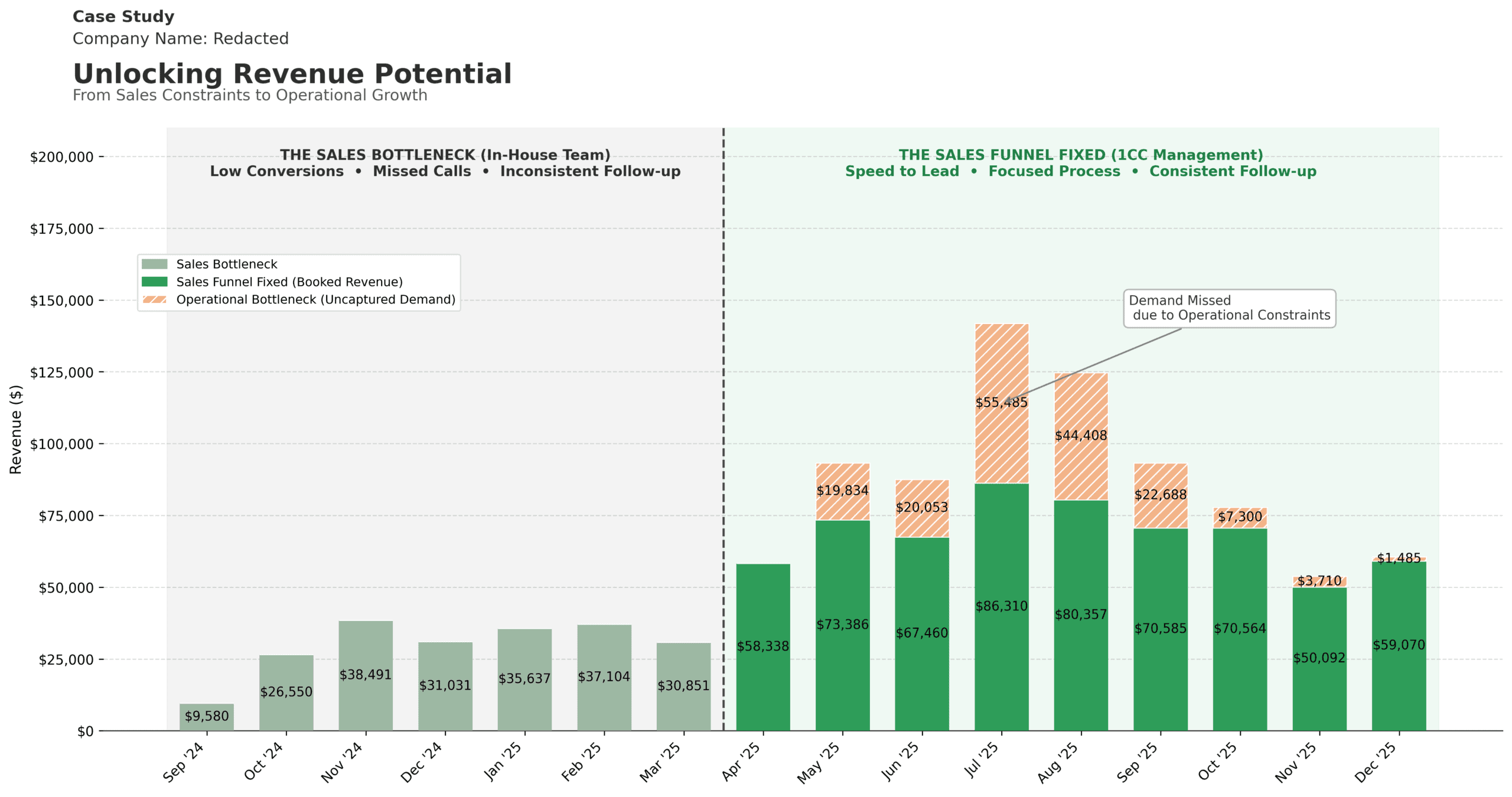
At first glance, this moving company appeared to be doing well. The phones were ringing. Leads were coming in consistently. Quotes were being given. But despite the activity, the schedule often looked lighter than expected. The sales team was busy answering calls, returning missed calls, and providing estimates — Yet booked jobs didn’t reflect the level of incoming demand.

What Was Actually Happening in Sales

A closer look revealed that sales weren’t broken — it was overloaded and under-structured.
Missed calls created a compounding problem. When calls were missed, significant effort went into trying to follow up with prospects who had already moved on. Quotes were provided, but follow-up was inconsistent. Some opportunities were worked repeatedly, while others quietly fell through the cracks. The result was a lot of sales activity, but less conversion than the demand should have
supported.

The Fix: Tightening Sales Execution

Our role wasn’t to increase lead volume or change marketing. Demand already existed. We focused on correcting sales process deficiencies that were creating avoidable loss:

Faster speed-to-lead on inbound calls and new inquiries

Consistent, intentional follow-up on quoted opportunities

Cleaner ownership of leads and quotes

More accurate estimating and expectation setting

The Result: Sales Bottleneck Removed

Once sales execution tightened, the impact was immediate. More leads converted into booked jobs using the same inbound demand. The schedule began to fill consistently, and forecasting became more reliable. Year-over-year revenue increased significantly — not because more leads were generated, but because fewer opportunities were lost.

The New Problem? Capacity.

As the schedule filled, a new challenge surfaced.
The company moved from a sales bottleneck to an operational one. Availability became the limiting factor, not demand. This shift clarified the next phase of growth — staffing, scheduling, and capacity planning —and gave ownership confidence that sales were no longer the weak link.

Why This Matters for Other Moving Companies

This case study reflects a common pattern. Many moving companies don’t struggle because marketing isn’t working. They struggle because sales execution can’t keep up with the demand they already have. Fixing response time, follow-up, and visibility often produces results quickly — and reveals where the real growth constraints lie.

Start With a Sales Assessment

If this sounds familiar, the next step isn’t a bigger marketing budget. A short, pressure-free sales assessment can help identify where opportunities are being lost, what’s already working, and whether tightening sales execution would move the needle for your business.

Book a Free Consultation